By Paran Homes
If your garage has become the place where everything goes to be forgotten, you are far from alone. For many homeowners, the garage starts as a functional space and gradually becomes a catch-all for seasonal items, sports equipment, tools, and belongings that you are not quite ready to throw away.
The good news is that no garage is too far gone to reclaim. With the right approach, you can transform even the most cluttered two-car garage into a well-organized, fully functional space.
Garage organization is more than just tidying up. It is about creating a system that works for the way you actually live. That means thinking through zones, storage solutions, and how to make everyday items genuinely easy to access. Whether you want a spotless workshop, a place to actually park your car, or a multifunctional space that does it all, the principles are the same.
This guide walks you through the entire process, from decluttering to final organization, so you can get your garage sorted and keep it that way.
Key Takeaways
- Start with a full declutter before buying any storage systems or products.
- Divide your garage into functional zones based on how you actually use the space.
- Vertical wall storage is one of the most underused resources in a typical garage.
- Labeling and consistent maintenance are what keep an organized garage organized long-term.
- Ceiling storage is ideal for seasonal or rarely accessed items.
Clear Everything Out First
The single biggest mistake people make when organizing a garage is trying to work around the existing mess. Moving items from one corner to another is not organizing; it is just shuffling them around. To do the job properly, you need to start with a completely empty space.
Pull everything out of the garage and into your driveway or yard. This gives you a clear view of what you actually have, and it forces you to make real decisions about each item rather than pushing it aside. Yes, this step takes time. It is also the step that makes everything else work.
Next, go through your belongings in categories. Group tools together, sporting goods together, holiday items together, and so on. This process will likely reveal duplicates (do you really need four hammers?), broken items you forgot about, and things that have no business being in the garage at all. Be ruthless. If you have not used it in a couple of years and have no concrete plan to use it, let it go.
What to Do With Items You Are Removing
- Donate functional items to a local thrift store or charity pickup service.
- Sell higher-value items through a garage sale or similar platforms.
- Recycle what can be recycled, including old electronics, paint, and batteries, through designated drop-off programs.
- Dispose of hazardous materials like old chemicals or oil through your municipality's hazardous waste collection.
- Trash what cannot be donated, sold, or recycled.
Create Zones Based on How You Use the Space
Once you know what you are keeping, the next step is to decide where everything goes. The most effective garage layouts are built around zones or dedicated areas for specific categories of items. This approach makes it easy to find things and maintain order over time.
Think about how often you use each category. Items you grab weekly, like tools for yard maintenance or sports gear for regular activities, should be in the most accessible spots. Seasonal items like holiday decorations or camping equipment that you pull out twice a year can live in harder-to-reach locations, such as high shelves or ceiling storage.
Also consider flow. The path from the garage door to the interior house door is your primary zone for everyday items. You do not want to walk past boxes of holiday lights every morning to get to your work bag.
Common Garage Zones to Consider
- A tool zone near a workbench or pegboard where hand tools, power tools, and hardware are within easy reach.
- A sports and recreation zone for bikes, helmets, balls, rackets, and outdoor gear.
- A garden zone near the garage door for hoses, shovels, rakes, and fertilizer.
- A seasonal storage zone on high shelves or in ceiling racks for items used only a few times per year.
- A household overflow zone for extra pantry items, paper goods, and cleaning supplies.
Use Your Walls and Ceiling
Most garages are designed with far more vertical space than people use. The floor fills up quickly, but the walls and ceiling often go completely untapped. This is where your biggest storage wins come from.
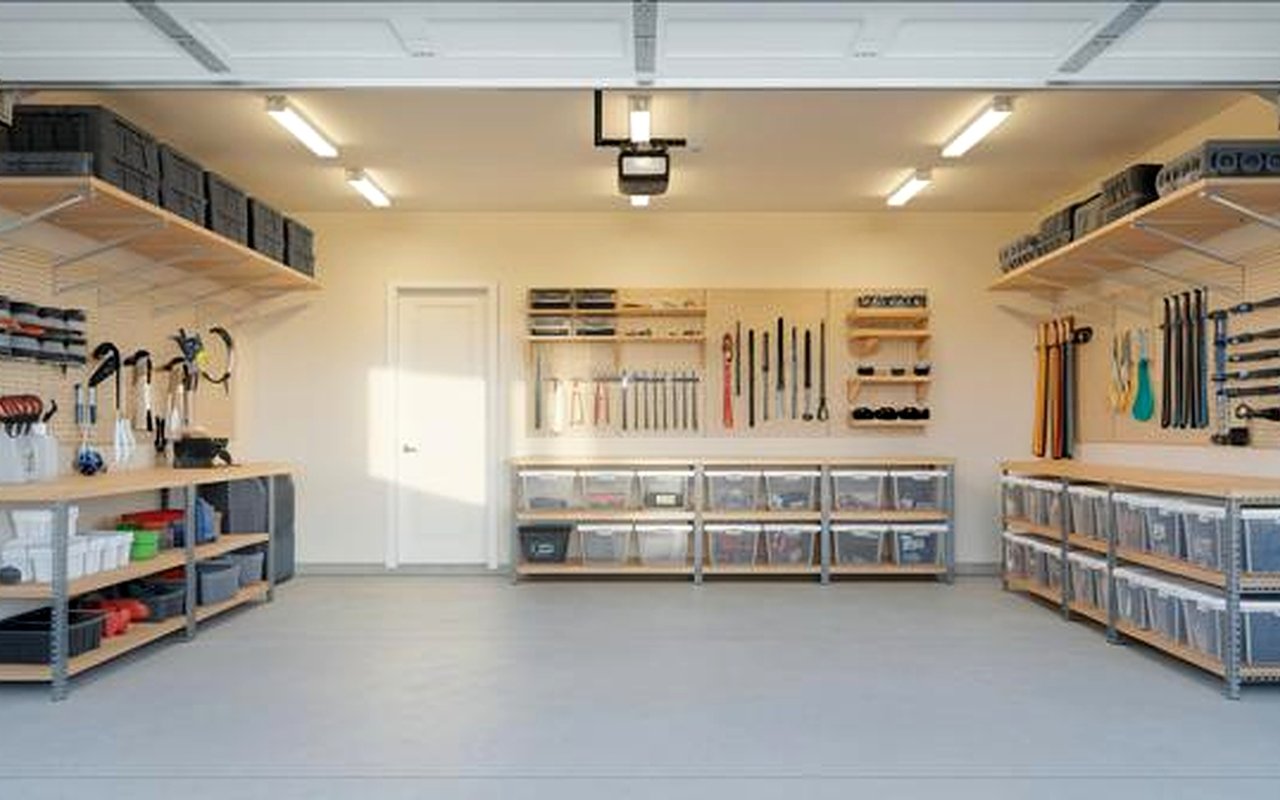
Wall-mounted systems are the backbone of a well-organized garage. Pegboards are a classic choice for tools because they keep everything visible and accessible. Slatwall panels offer more flexibility, allowing you to rearrange hooks and baskets as your needs change. Modular wall systems can be configured in countless ways and are worth the investment if you plan to be in your home for years.
For the ceiling, overhead storage racks are ideal for bins of seasonal items, extra luggage, or anything in large, light boxes. Just make sure whatever you store overhead is not something you will need frequently, since climbing a ladder to retrieve items gets old fast. Also, verify that your ceiling joists can handle the weight before installing any overhead system.
Wall and Ceiling Storage Options to Consider
- Pegboards for tool storage, which allow for easy reconfiguration as your tool collection grows.
- Slatwall panels with interchangeable hooks, bins, and shelves for flexible organization.
- Heavy-duty wall-mounted shelving units for bins, automotive supplies, and larger items.
- Ceiling-mounted overhead racks for seasonal totes, camping gear, and luggage.
- Bike hooks or pulley systems that lift bikes off the floor and keep them out of the way.
Choose the Right Bins, Shelves, and Containers
The container you store something in matters almost as much as where you store it. Garage environments deal with temperature fluctuations, dust, and moisture. Cardboard boxes might work fine indoors, but in a garage, they will warp, deteriorate, and become inviting for pests. Invest in sturdy, stackable plastic bins with lids.
Clear bins are ideal for most categories because you can see the contents without opening anything. If you prefer colored bins, use a consistent color-coding system, for example, red for automotive, blue for sports, green for garden, and so on. Whatever system you choose, labeling is non-negotiable. A label maker produces clean, legible labels that hold up over time, though even a marker on masking tape is better than nothing.
Shelving is the other major investment worth making. Freestanding wire or metal shelving units are durable, allow airflow, and can be reconfigured as needed. Avoid cheap plastic shelving that will bow under weight. If you are storing heavy items like automotive fluids or power tools, invest in heavy-duty metal shelving rated for the load.
Tips for Choosing Garage Storage Containers
- Use uniform bin sizes across your shelving units to maximize space and keep stacking consistent.
- Opt for lids that snap securely to protect contents from dust and moisture.
- Reserve smaller bins or divided containers for hardware, screws, batteries, and other small items.
- Label every bin on the front and the top so you can identify contents from multiple angles.
- Consider bins with handles for any category you access frequently.
FAQs
How Do I Keep My Garage Organized Long-Term?
The key is building simple habits and doing a regular reset. Schedule a quick tidy-up every month and a more thorough review once or twice a year. When you bring something new into the garage, find it a home immediately rather than setting it on the floor. The more consistently you put things back where they belong, the less maintenance the space requires over time.
What Is the Best Flooring for a Garage Organization Project?
Once the space is organized, many homeowners choose to add epoxy coating or interlocking floor tiles to the garage floor. These surfaces are easier to clean, more resistant to stains, and give the garage a finished look.
Should I Hire a Professional Organizer for My Garage?
A professional organizer can be helpful if the project feels overwhelming or if you want a truly customized solution. Many specialize in garage spaces and can assess your needs, recommend specific products, and implement a system in a fraction of the time it might take on your own. If your budget allows and the space is particularly large or complex, it can be well worth the investment.
Can I Organize My Garage Without Buying New Storage Products?
Absolutely. Decluttering alone frees up significant space, and repurposing what you already have, using bins from other rooms, repurposing old furniture, or hanging items on nails, can take you further than you might expect. That said, a modest investment in wall hooks, uniform bins, and sturdy shelving tends to pay dividends in how sustainable the organization is over time.
Stay Organized
The garage is one of the most versatile spaces in your home. With the right system, it can hold everything it needs to without feeling chaotic, and with proper maintenance, it can stay that way. The investment you put in now will pay off every time you walk in and find exactly what you are looking for.
If you are thinking about buying or selling a home in Traditions of Braselton, reach out to our team at
Paran Homes. We are happy to share insights on what buyers notice, what adds value, and how to present your home at its best.